Flooring after a storm or flood in Tampa: what to do first
By Mei Nair · Updated 2026-07-05
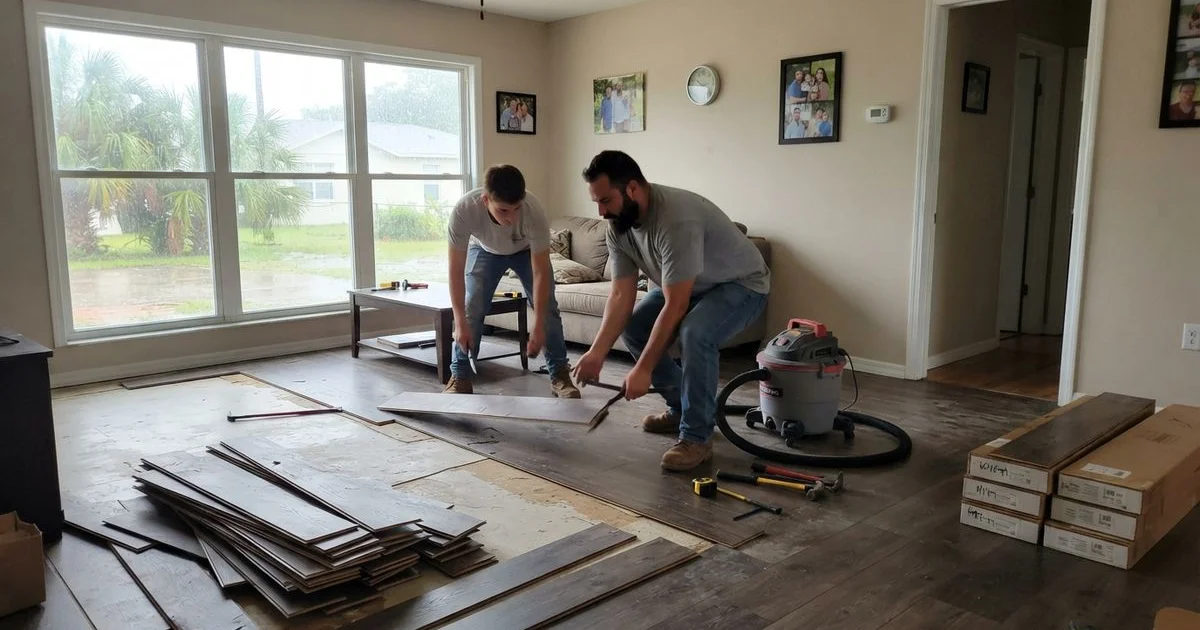
Tampa’s storm season brings a familiar problem: water gets into a home faster than anyone can respond, and flooring is usually the first thing affected. What you do in the first few days matters more than almost any decision that follows, since flooring that’s dried out properly can sometimes be saved, and flooring left wet too long usually can’t.
Standing water and prolonged dampness can create mold conditions that affect indoor air quality. This is general guidance, not a substitute for a professional mold or structural inspection if you have health concerns or see visible mold growth.
The first 24 to 48 hours
Remove standing water as fast as possible, using a wet vac or pump if the water is more than a light film. Pull up any area rugs immediately, since carpet padding and rugs left sitting in water accelerate mold growth faster than hard flooring does. If carpet itself has been soaked for more than 24-48 hours, most restoration professionals recommend removing it rather than trying to dry it in place, since the padding underneath rarely dries evenly.
For hard flooring like hardwood, laminate, or vinyl, get airflow moving right away: fans, open windows if humidity outside allows, and a dehumidifier if you have one. Speed matters most here. Hardwood that sits wet for a few days starts cupping; caught fast enough, it sometimes flattens back out once fully dried.
The first week: drying and assessment
This is where a restoration company earns its keep if the damage is significant. Professional drying equipment moves air and pulls moisture out of a subfloor far faster than household fans alone, and it can mean the difference between saving a floor and replacing it. Expect drying to take anywhere from a few days to two weeks depending on how much water got in and what’s underneath.
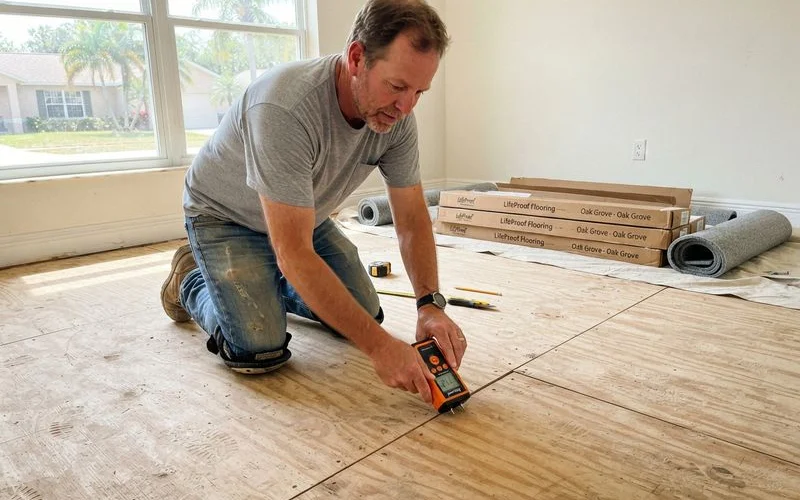
Once things are dry, a moisture check on the subfloor confirms whether it’s safe to install new flooring or repair what’s there. Skipping this step is the single most common reason a post-flood flooring job fails months later: new flooring installed over a subfloor that looks dry but isn’t traps moisture and leads to the same problems all over again.
| Timeline | What’s happening |
|---|---|
| Hours 0-48 | Remove standing water, pull soaked rugs and carpet, start airflow |
| Days 2-7 | Professional drying equipment if damage is significant |
| End of week 1 | Subfloor moisture check before any new flooring goes down |
| Week 2 and beyond | Assessment of what’s salvageable versus what needs replacing |
What typically survives versus what doesn’t
Tile and stone generally survive flooding well, since the material itself isn’t damaged by water, though grout and any wood-look laminate transitions nearby may need attention. Solid hardwood has a real chance if caught early. Engineered hardwood and laminate are more vulnerable, since water can get into the core layers and cause swelling that doesn’t reverse. Carpet and its padding are the least likely to be worth saving once thoroughly soaked, mainly because of what grows underneath, not the fibers themselves.
Getting a contractor involved
Once the space is dry and assessed, bring in a flooring contractor to look at what needs replacing and what can be repaired in place. A contractor experienced with storm damage will check subfloor moisture themselves before quoting anything, and should be able to tell you plainly which materials are salvageable versus which aren’t worth trying to save.
If your damage involves an insurance claim, document everything with photos before any material comes out, since that record supports the claim regardless of what your policy ultimately covers. Note the date water entered the home, how long it sat before removal, and any steps you took to dry the space, since adjusters often ask for this timeline directly. Our guide on does insurance cover flooring damage walks through what’s typically covered and what usually isn’t.
Avoiding a repeat problem
A flood is disruptive enough without the same damage happening again during the next storm. If the original cause was a plumbing failure, get it fixed properly, not patched, before new flooring goes down. If water entered from outside, ask your contractor whether the new flooring choice and any underlayment can reduce the chance of the same materials being ruined again. Rigid-core vinyl and tile hold up far better to a repeat event than carpet or solid hardwood, which is worth weighing against personal preference for a home in a flood-prone area.
Where to start
Our Tampa flooring contractor directory lists businesses ranked by our scoring method, based on real review data rather than who advertises the loudest. Look for a contractor with recent reviews mentioning storm or water damage work specifically, since that experience matters more here than for a routine remodel. If the flooding happened while your home was already listed, our guide on flooring before selling a Tampa home covers which fixes are worth making before you show it again.
FAQ
- Can water-damaged hardwood floors be saved?
- Sometimes, if the water is removed within 24-48 hours and the wood hasn't started cupping or buckling. Once boards warp or separate, replacement is usually more practical than drying and refinishing.
- How long does flooring take to dry out after flooding?
- With proper fans and dehumidifiers running, a subfloor can take anywhere from three days to two weeks to dry fully, depending on the material and how much water got underneath it.
- Is it safe to lay new flooring right after a flood?
- Not until the subfloor has been tested and confirmed dry. Installing over a damp subfloor traps moisture underneath and often leads to mold or a failed installation within months.
- Should I call a restoration company or a flooring contractor first?
- A restoration company first if there's standing water or active drying needed. A flooring contractor comes in afterward to assess what needs replacing once the space is fully dry.