Safer flooring for aging parents or a loved one with mobility issues
By Mei Nair · Updated 2026-07-24
This article offers general home safety considerations, not medical or occupational therapy advice. For a fall-risk assessment tailored to a specific person’s needs, consult a physician or occupational therapist.
When a parent or loved one is aging in place, or living with a mobility limitation, flooring is one of the more overlooked safety factors in a home. It’s not just about appearance at that point, it’s about reducing the everyday risk of a fall, which is one of the most common causes of serious injury for older adults.
What makes flooring risky for mobility issues
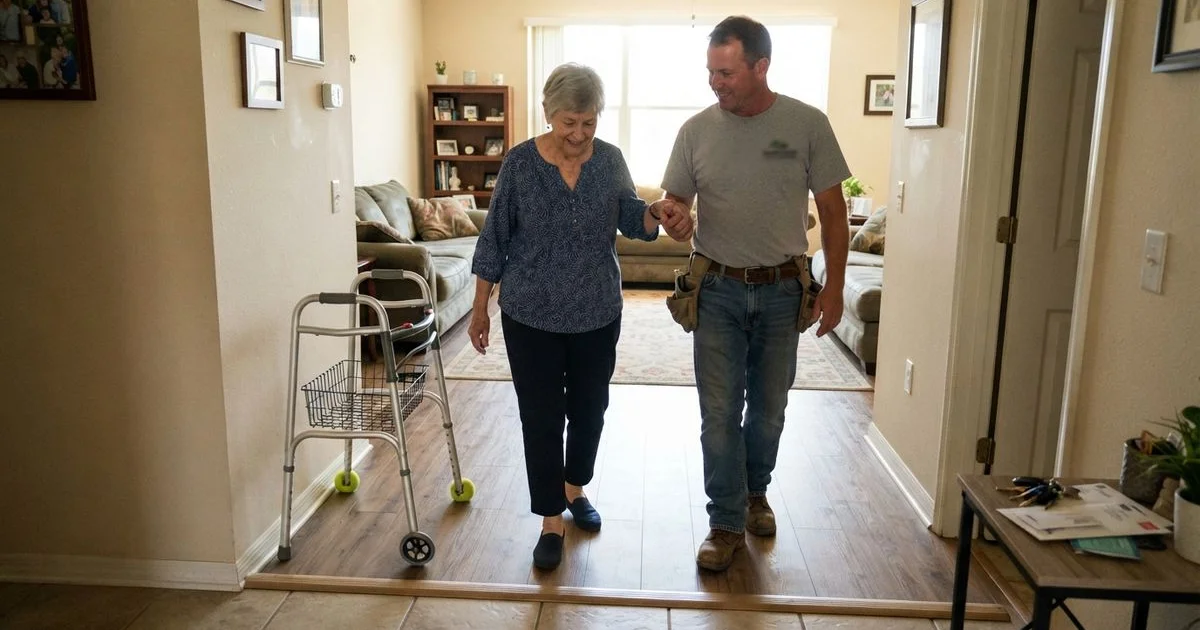
Loose rugs and runners are consistently flagged in home safety assessments as a leading trip hazard, since an edge can catch a foot or a walker leg without warning. Thick or plush carpet can make walkers and wheelchairs harder to maneuver, requiring more effort to push through. Glossy, highly polished hard flooring can be slippery, especially with socks or certain shoe soles. And uneven transitions between rooms, even a small lip between tile and hardwood, are a common catch point for feet, canes, and mobility aids.
Flooring choices that tend to work well
Low-pile carpet, securely tacked down rather than loose, offers some cushioning without the maneuvering difficulty of thick carpet. Matte-finish vinyl plank or tile provides a firm, consistent surface that’s easier for a walker or wheelchair to move across, while avoiding the slip risk of a glossy finish. Cork flooring is worth considering too, since it offers a bit of give underfoot, which can matter for both comfort and reduced injury severity in a fall.
| Flooring type | Fit for mobility concerns |
|---|---|
| Low-pile, secured carpet | Good, cushions falls without hindering movement |
| Matte vinyl plank or tile | Good, firm and easy to move across |
| Glossy or highly polished tile | Avoid, slip risk |
| Thick or plush carpet | Avoid, hinders walkers and wheelchairs |
| Loose area rugs | Avoid or secure with non-slip backing |
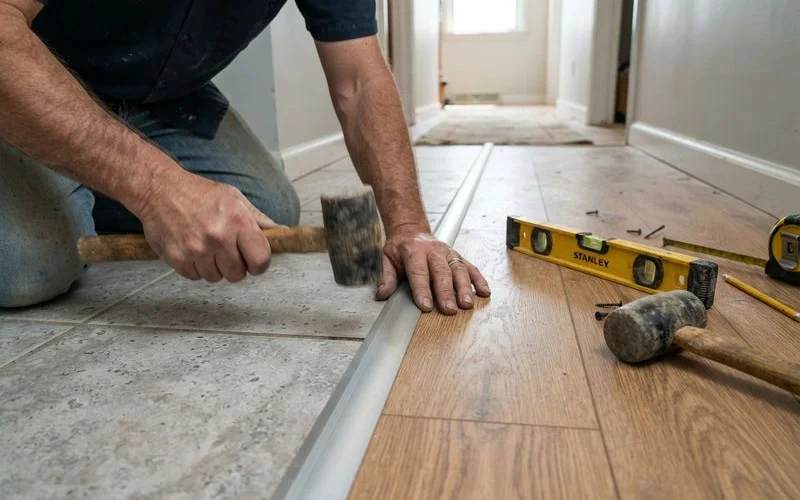
| Uneven room transitions | Address with flush or ramped thresholds |
Addressing transitions between rooms
Even a small height difference between two flooring types can be enough to catch a foot or mobility aid. Where possible, choosing similar-height materials throughout main living areas, or having a contractor install a flush transition strip, reduces this risk more than most people expect. Ramped thresholds are a straightforward fix where a step-down can’t be avoided entirely.
Beyond material: think about the whole path
Fall risk isn’t only about the flooring material itself. Consider the full path someone walks regularly: from the bedroom to the bathroom, from a chair to the kitchen. Consistent flooring along that path, good lighting, and clear sightlines matter as much as the surface underfoot. A flooring contractor can help with the surface; a broader home safety walk-through, sometimes done with an occupational therapist, can catch the rest.
Nighttime trips to the bathroom are a particularly common fall scenario, so pairing the flooring choice with basic lighting fixes, like a motion-sensor nightlight along that specific path, often does more for safety than the flooring change alone.
Making the change without overwhelming the budget
A full-home flooring overhaul isn’t always necessary or realistic. Prioritizing the highest-risk areas first, bathrooms, the path to the bathroom at night, and any room with loose rugs, often addresses the most pressing risk without the cost of replacing every floor in the house at once.
Bathroom flooring deserves particular attention, since water on a hard surface combines two risk factors at once. A textured, slip-resistant tile or vinyl designed for wet areas is worth the modest cost difference over a standard smooth finish in that specific room, even if the rest of the home uses something else.
Getting started
If you’re planning this kind of update for a parent or loved one, look for a contractor who has handled aging-in-place projects before and understands the specific priorities involved, not just standard remodeling. For the broader set of questions worth asking any contractor, see our guide on choosing a flooring contractor in Tampa. Our Tampa flooring contractor directory, scored through our scoring method, is a good place to start comparing contractors with relevant experience.
FAQ
- Is carpet safer than hard flooring for an elderly parent?
- Not necessarily. Low-pile, securely installed carpet can cushion a fall, but thick or loosely laid carpet and rugs are a common trip hazard. A low-pile, firmly secured surface is generally safer than either extreme.
- What flooring is best for someone using a walker or wheelchair?
- A firm, consistent, low-friction surface like tile, vinyl plank, or a hard-surface floor with minimal texture generally makes movement easier than carpet or uneven transitions between rooms.
- Should transitions between rooms be a concern?
- Yes. Height differences between flooring types, even small ones, are a common trip point. Flush transitions or ramped thresholds reduce that risk meaningfully.
- Are rugs ever appropriate in a home set up for aging in place?
- Loose area rugs are generally best avoided or secured with non-slip backing, since they're one of the most common fall triggers noted in home safety assessments.