How to choose a flooring contractor in Tampa: questions to ask and red flags to avoid
By Mei Nair · Updated 2026-06-18
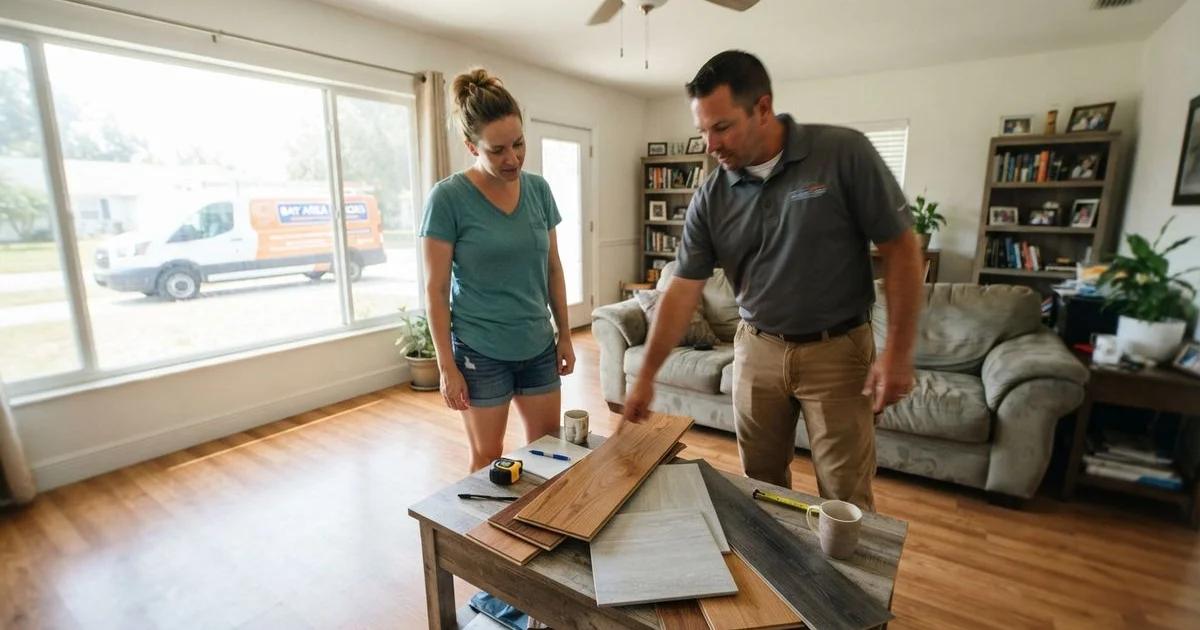
Most people shopping for a Tampa flooring contractor have never hired one before, and the market doesn’t make it easy: dozens of businesses, similar-sounding claims, and a job that’s hard to judge until the crew is already in your living room. The good news is that the signals that separate a reliable contractor from a risky one show up early, before you’ve paid a deposit, if you know where to look.
Our ranked list of Tampa tile and stone flooring contractors is built from the same signals covered here: rating, review volume, recency, and sentiment, weighted through our scoring method rather than picked by hand.
What good contractors have in common
Across the reviews we analyzed for Tampa flooring businesses, the traits that came up again and again weren’t about price. They were about how the job actually went:
- A named crew that shows up when scheduled, not a rotating cast of subcontractors.
- Clear answers about material choice and cost before the sale, not after.
- A clean, contained worksite, especially during tear-out and dust-heavy tile or hardwood work.
- Fast responses when something needs a follow-up call.
None of that is exotic. It’s mostly about communication and follow-through, which is exactly where the weaker end of the market falls short.
The questions worth asking before you sign
Who is actually doing the work? Some outfits sell the job then hand it to a rotating sub-crew. Ask directly whether the person you’re talking to will be on-site, and how many other jobs their crew is juggling that week.
What’s the payment schedule? A standard structure is a modest deposit, a progress payment partway through, and a final payment on completion. Be cautious of anyone asking for the full amount upfront.
What happens if the subfloor needs repair? Tampa’s concrete slabs and older plywood subfloors sometimes hide moisture damage or unevenness that only shows up once old flooring is pulled up. A contractor who explains how that gets priced and approved, rather than promising it “won’t happen,” is being straight with you.
Can I see recent work, not just a portfolio? Photos from three years ago don’t tell you how a crew performs today. Ask for a job finished in the last few months, ideally one close to your project size.
What’s the warranty, and who honors it if the business changes hands? Labor warranties typically run one to two years. Get it in writing, not a verbal promise.
Red flags the reviews keep surfacing
| Red flag | Why it matters |
|---|---|
| No written estimate, verbal price only | Leaves no record if the final bill runs higher |
| Full payment requested before work starts | Removes your bargaining power if the job stalls or quality slips |
| Vague on start and completion dates | Correlates with the “project delays” complaint pattern seen across the corpus |
| Can’t explain how subfloor issues get priced | Often means surprise charges once demolition starts |
| Unreachable after the deposit clears | The single most common complaint theme in the reviews behind this guide |
| Pressure to decide same-day | A rushed decision skips the comparison step that catches bad pricing |
None of these guarantee a bad outcome on their own, but two or more together is worth pausing over.
Weighing price against everything else
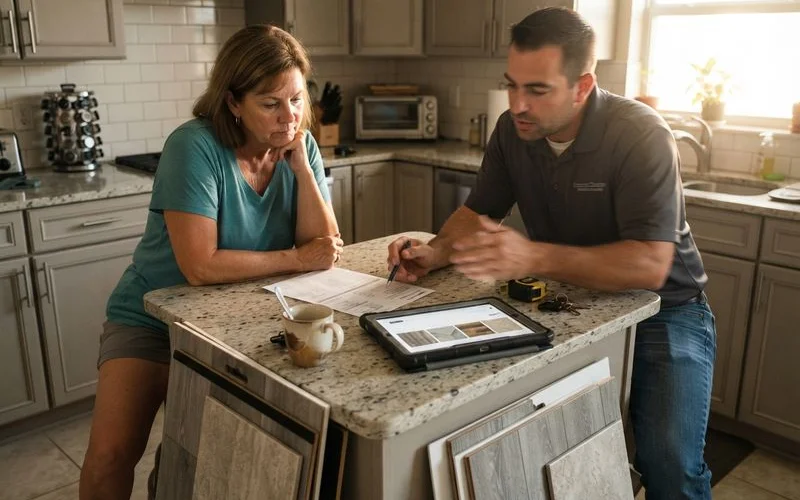
The lowest bid isn’t automatically the best one, and the highest isn’t automatically the safest. What matters is whether the price lines up with what’s included: material grade, subfloor prep, removal and haul-away of old flooring, and the timeline. A contractor who walks you through those line items is giving you something a bare number can’t: a way to compare quotes that isn’t just about who’s cheapest.
If a quote comes in noticeably lower than the others, ask what’s different. Sometimes it’s a legitimately leaner operation with lower overhead. Sometimes it’s an install that skips prep work that shows up as cupping or lifting a year later.
Making the decision
Once you’ve got two or three quotes, a short reference check, and clear answers to the questions above, the choice usually gets easier. Go back to the contractor who answered plainly, put the payment schedule in writing without being asked twice, and had recent, verifiable work to point to. That combination matters more than a slightly better price. Once you’ve settled on someone, our guide on what to expect during a flooring installation walks through the stages from measuring to final walkthrough, so you know what a job on schedule actually looks like. You can start comparing options with our directory of Tampa flooring contractors, ranked by real review data rather than who spent the most on advertising.
FAQ
- How many quotes should I get before hiring a flooring contractor?
- Three is a reasonable minimum. It gives you enough spread to spot an outlier price and to compare how each contractor talks about the job, not just what they charge for it.
- Is a lower quote ever a red flag?
- It can be. A bid that's well below the others sometimes means thinner materials, no subfloor prep, or a plan to add costs later. Ask what's included before assuming it's the better deal.
- Should I hire based on star rating alone?
- No. Two contractors can share a similar average while one has recent reviews repeating the same complaint, like slow callbacks or rushed prep work. Read a handful of recent reviews, not just the number.
- What should be in writing before work starts?
- Materials and brand, total square footage, start and completion dates, payment schedule, and what happens if the crew finds subfloor damage once old flooring comes up.