What to expect during a flooring installation, from quote to final walkthrough
By Mei Nair · Updated 2026-06-29
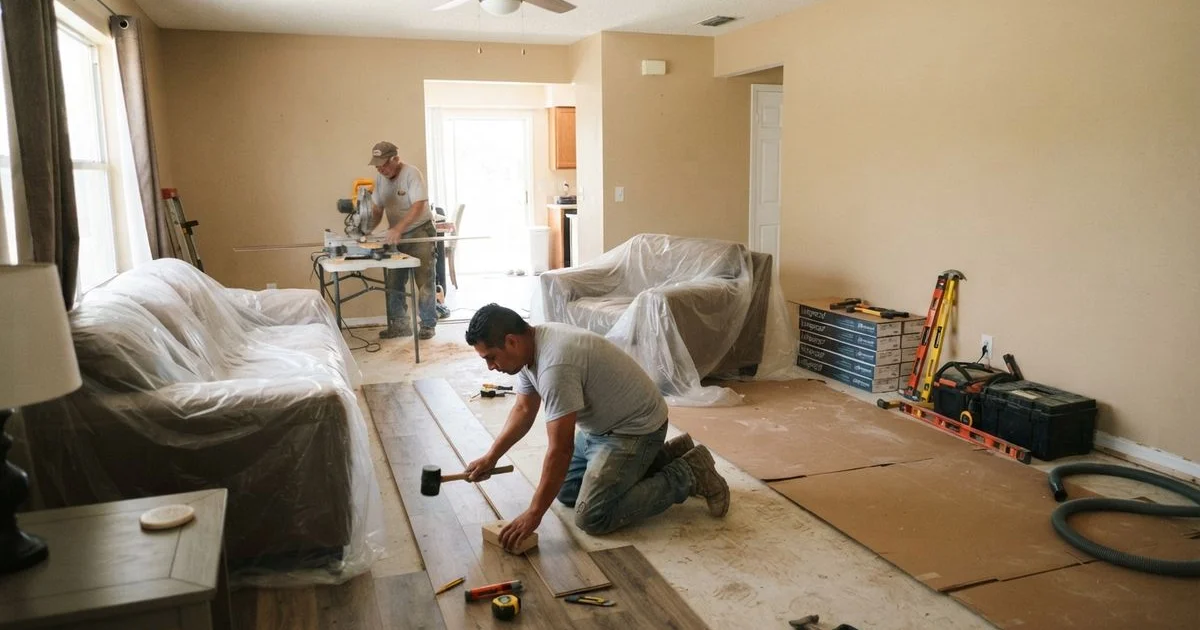
Flooring installation follows a fairly predictable sequence once you look past the specifics of material. Knowing the stages ahead of time makes it easier to plan around the disruption and to know if a job is on track.
Stage one: measuring and quoting
A contractor visits to measure the space, check subfloor condition, and note anything unusual: uneven areas, moisture concerns, or transitions between rooms. This visit is also when material samples typically come out. A thorough contractor tests for moisture on concrete slabs before quoting tile, stone, or hardwood, since Florida’s humidity makes that step worth doing upfront rather than discovering an issue mid-job. You can browse contractors who specialize in this kind of work through our Tampa tile and stone flooring category.
Stage two: scheduling and material order
Once you approve a quote, materials get ordered, which can take anywhere from a few days for in-stock products to several weeks for a special order. This is the point to confirm start date, expected duration, and payment schedule in writing.
Stage three: prep and removal
If old flooring is coming out, this is usually the messiest and loudest part of the job. Expect dust, noise, and a dumpster or disposal bags on-site. Once the subfloor is exposed, the crew checks it for damage, unevenness, or moisture, and this is where a job can take an unplanned turn if repairs are needed. A contractor who pauses to show you the problem and get sign-off before proceeding is doing this the right way.
If you have pets or young kids in the house, plan for them to be elsewhere during this stage specifically. Dust, exposed nails or staples, and open doorways make demolition day the least manageable part of the whole project to be around.
Stage four: installation
Actual installation speed varies a lot by material. Floating floors like laminate and click-lock LVP go down fastest since there’s no adhesive cure time. Glue-down and tile work slower because of setting and curing time between steps. A carpet job is often finished within a day; a full-home tile job can take most of a week.
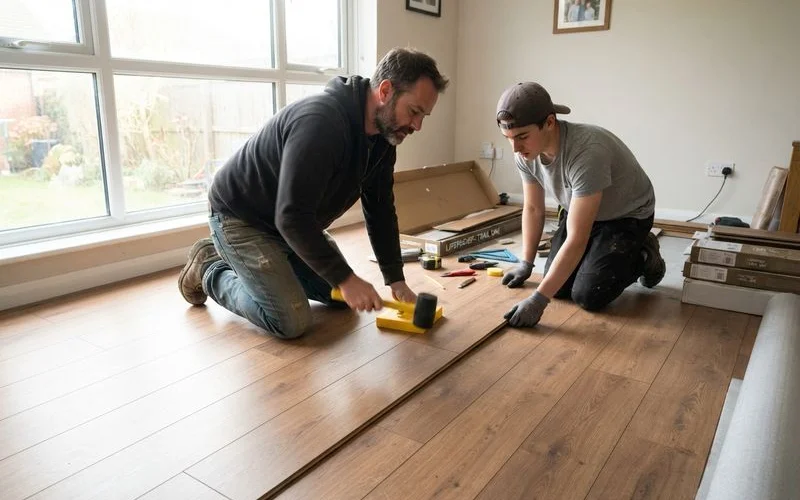
Stage five: finishing details
Trim, transition strips between rooms, baseboards, and touch-up work happen last. For tile, this includes grouting and sealing, which needs curing time before the floor sees regular foot traffic. This stage is often rushed by weaker contractors trying to close out a job quickly, so it’s worth walking through these details before you sign off.
Typical timeline by job size
| Job scope | Typical duration |
|---|---|
| Single room, no removal needed | 1 day |
| Single room with removal | 1-2 days |
| Whole home, floating floor (laminate/LVP) | 3-5 days |
| Whole home, tile or hardwood | 5-7+ days |
| Job with unplanned subfloor repair | Add 1-3 days |
The final walkthrough
Before the crew leaves, walk the space with them. Check that transitions are flush, grout lines are even, there’s no visible adhesive residue, and nothing squeaks or flexes underfoot. This is the moment to flag anything, not after the invoice is paid. A contractor who welcomes this walkthrough rather than rushing you through it is a good sign heading into the warranty period.
Bring a flashlight for low-angle lighting across the floor, since it shows unevenness or seam gaps that overhead lighting can hide. Check a few spots by hand too, not just by eye, for tile that sounds hollow or planks that shift underfoot.
What separates a smooth job from a rough one
The reviews behind our scoring data point to a consistent pattern: jobs go well when the crew communicates before problems become surprises, and go poorly when a subfloor issue or delay gets discovered after the fact with no explanation. Ask upfront how a contractor handles mid-job surprises, since the answer tells you more about how the job will actually go than the initial quote does. If you’re still comparing contractors, our guide on choosing a flooring contractor in Tampa covers the questions and red flags worth checking before you sign.
If you’re ready to start getting quotes, our directory of Tampa flooring contractors ranks businesses using our published scoring method, based on real review data rather than who advertises the most.
FAQ
- How long does a typical flooring installation take?
- A single room often finishes in a day or two. A whole-house job with multiple materials and removal usually runs three to seven working days, longer if subfloor repairs come up.
- Do I need to move my own furniture?
- Some contractors include furniture moving in the quote, others don't. Ask before install day, since clearing rooms yourself in advance keeps the schedule on track either way.
- Can I stay in the house during installation?
- Usually yes, though dust from tile or hardwood work and strong adhesive odors from glue-down installs can make it worth planning to be out during the messiest stretch.
- What happens if the crew finds a problem mid-job?
- A good contractor stops, shows you what they found (like subfloor damage or a moisture reading), and gets your approval on the fix and any added cost before continuing.