Flooring, humidity and mold in Florida: what homeowners should watch for
By Mei Nair · Updated 2026-07-18
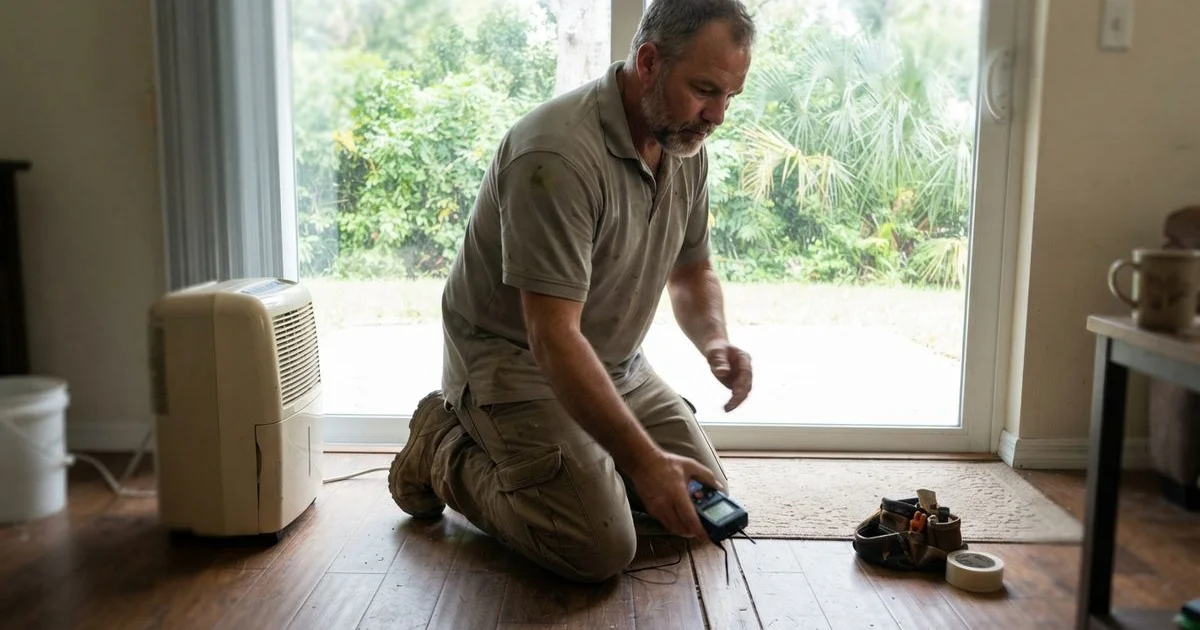
This article covers general information about flooring, moisture, and mold risk. It is not medical or structural engineering advice. If you have health concerns related to mold exposure, or suspect significant structural moisture damage, consult a qualified professional directly.
Florida’s humidity is a fact of life, and it’s also one of the more predictable causes of flooring problems in Tampa homes. Understanding how moisture moves through a house helps explain why some materials perform well here and others don’t, and what early signs are worth acting on before a small issue becomes a full replacement.
Why humidity is hard on flooring
Wood-based flooring absorbs and releases moisture from the surrounding air, expanding when humidity is high and contracting when it’s low. Florida’s swing between a humid wet season and a drier stretch means solid hardwood is working harder here than it would in a more stable climate. Concrete slab foundations, common across Tampa, add another path for moisture: vapor can move up through a slab and into flooring from below, which is a different problem than humidity in the air and one that surface-level fixes don’t solve.
Early warning signs worth acting on
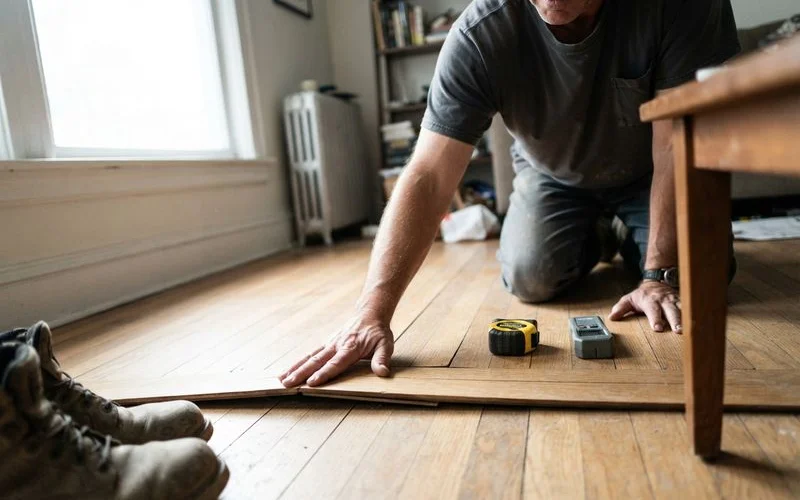
Cupping, where the edges of hardwood boards sit higher than the centers, is one of the clearest signs that moisture is getting into the wood faster than it can release. A musty smell near baseboards or in a specific room, even without visible damage, often means moisture is present somewhere behind the walls or under the flooring. Tile that sounds hollow when tapped can indicate the adhesive underneath has failed, sometimes moisture-related. Any visible dark spotting on grout or at the base of walls is worth investigating before it spreads.
| Warning sign | Likely meaning |
|---|---|
| Cupped or crowned hardwood boards | Excess moisture absorption, often from below |
| Musty smell with no visible cause | Hidden moisture behind walls or under flooring |
| Hollow-sounding tile | Adhesive failure, sometimes moisture-related |
| Dark spotting on grout or baseboards | Possible mold growth starting |
| Soft or spongy spots underfoot | Subfloor moisture damage |
Which materials handle Florida’s climate best
Tile and natural stone are essentially unaffected by humidity swings, since the material itself doesn’t absorb moisture the way wood does. Vinyl-based products, including LVP, also perform well because their core layers resist water. Engineered hardwood, with its cross-layered construction, handles humidity better than solid hardwood, though it’s still a wood product and not immune to moisture problems if water gets underneath it directly. Solid hardwood is the most climate-sensitive option and requires the most attention to indoor humidity control and any water exposure risk.
Practical steps that reduce risk
Keeping indoor relative humidity in a moderate range with a dehumidifier during Florida’s wettest months reduces the swing that stresses wood flooring the most. Address any active leak, no matter how small, quickly, since a slow drip left for weeks does more cumulative damage than a single larger event caught immediately. Confirm bathroom and kitchen exhaust fans vent to the outside rather than into an attic space, since that’s a common source of hidden moisture buildup over time.
Running the air conditioning consistently, rather than shutting it off for long stretches while away, also helps in Tampa specifically, since a closed-up home without climate control lets indoor humidity climb quickly during the hotter months.
When it’s a bigger problem than surface cleaning
Mold that has taken hold on a subfloor or underlayment generally needs more than a surface clean, since covering it with new flooring doesn’t stop the growth underneath. If you see recurring dark spotting, smell persistent mustiness, or have had a known water event in the past that wasn’t fully dried out, it’s worth having the area properly assessed before installing anything new over it. If the moisture traces back to a specific event like a leak or storm, our guide on does insurance cover flooring damage explains what a typical policy will and won’t pay for, mold included.
Choosing flooring with this in mind
If you’re replacing flooring anyway, factoring in Florida’s climate from the start can save a repeat problem down the line. A contractor familiar with local conditions will typically ask about past water issues and check subfloor moisture before recommending a material. Our Tampa flooring contractor directory, scored using our scoring method, is a good starting point for finding one with that kind of experience.
FAQ
- What flooring holds up best in Florida's humidity?
- Tile, stone, and vinyl-based products like LVP handle moisture swings the best, since they don't absorb humidity the way solid wood does. Engineered wood with a stable core is a middle option.
- Is cupping in hardwood floors always a moisture problem?
- Almost always. Cupping, where board edges rise higher than the center, is a near-universal sign that the wood is absorbing more moisture than it should, usually from below rather than above.
- Can I prevent humidity damage without replacing my flooring?
- Running a dehumidifier to keep indoor humidity in a moderate range, fixing any active leaks quickly, and making sure bathroom and kitchen exhaust fans actually vent outside all help significantly.
- Does mold under flooring always mean the floor has to come out?
- Often yes if the mold is established on the subfloor or underlayment, since simply covering it doesn't stop growth. Limited surface mold caught early sometimes can be cleaned and addressed without full replacement.