Florida flooring contractor licensing and permits: what homeowners should check
By Mei Nair · Updated 2026-07-12
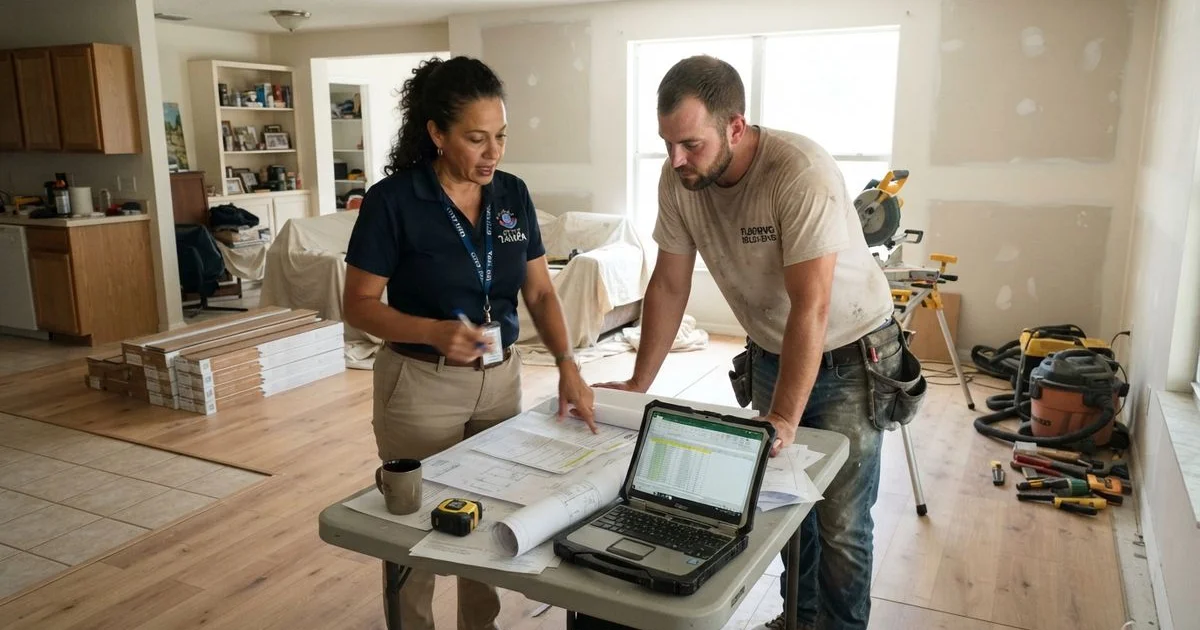
This article summarizes general licensing and permitting concepts for flooring work in Florida. It is not legal advice. Requirements vary by county and by project scope, so confirm specifics with your local building department before starting work.
Flooring might seem like a straightforward home project, but Florida’s licensing and permitting rules still apply in ways that catch homeowners off guard, especially when a flooring job is part of a larger remodel or involves work beyond simply laying new material over an existing subfloor.
When a permit typically applies
As a general pattern, replacing flooring in the same footprint with no structural changes, such as swapping worn carpet for vinyl plank or replacing tile with the same size and layout, often falls outside permit requirements. Once the work involves altering subfloor structure, moving plumbing (like in a bathroom retile), or is bundled into a larger renovation, a permit is more commonly required.
Because these thresholds vary by county and even by municipality within the Tampa Bay area, the only reliable way to know for certain is to check with your local building department before work begins, or ask your contractor to confirm and document it.
| Type of work | Permit often needed? |
|---|---|
| Like-for-like flooring swap, no subfloor change | Often no |
| Flooring as part of a bathroom or kitchen remodel | Often yes |
| Work involving plumbing or structural changes | Usually yes |
| Epoxy or coating over existing concrete | Often no |
| Major subfloor repair or replacement | Often yes |
Why licensing matters for flooring work
Florida requires contractors performing certain scopes of construction work to hold an appropriate state or local license, depending on what the job involves. A licensed contractor has met minimum competency and insurance requirements, which matters if something goes wrong: a licensed, insured contractor is accountable in ways an unlicensed one typically isn’t.
Before hiring, verify a contractor’s license through Florida’s Department of Business and Professional Regulation license lookup tool. It’s a quick check that confirms whether the license is active and shows any disciplinary history on record. Ask for the license number directly and check it yourself rather than relying on a business card or website claim.

Insurance is a separate check from licensing
A license confirms competency requirements were met; it doesn’t confirm current insurance. Ask specifically for proof of general liability insurance and, if the contractor has employees, workers’ compensation coverage. This protects you if a worker is injured on your property or if the job causes accidental damage to your home.
Ask the contractor to provide a current certificate of insurance directly from their insurer rather than a photocopy they hand you, since a certificate sent straight from the insurance company is harder to falsify and easier to confirm is still active.
Why unpermitted work becomes a problem later
Work done without a required permit can surface as a real issue down the line: home sale disclosures often ask about permitted work, and unpermitted alterations can complicate a sale, delay a closing, or require costly retroactive permitting. Insurance claims related to flooring or water damage can also get more complicated if prior unpermitted work is discovered during the claims process. It’s a risk worth avoiding by confirming permit requirements before the job starts, not after.
Questions worth asking before you hire
Ask whether the specific job requires a permit and who is responsible for pulling it, since some contractors handle this as part of their service and others expect the homeowner to. Ask for the license number and confirm it independently. Ask for proof of insurance directly rather than taking it on faith. These three checks take a few minutes and meaningfully reduce risk on a job that, for larger scopes, represents a significant investment. They pair well with the broader vetting questions in our guide on choosing a flooring contractor in Tampa.
None of this replaces reading your contract closely, but it does narrow the field to contractors who are operating within the rules, which is a reasonable baseline before comparing quotes on price or timeline.
Our directory of Tampa flooring contractors lists businesses along with review-based scoring through our scoring method, which is a useful starting point, though license and insurance verification is still worth doing directly before you sign a contract.
FAQ
- Do I need a permit just to replace flooring?
- Simple like-for-like flooring replacement, such as swapping carpet for vinyl in the same footprint, often doesn't require a permit. Work that changes the subfloor structure or is part of a larger remodel usually does. Check with your local building department to confirm.
- How do I verify a contractor's license in Florida?
- Florida's Department of Business and Professional Regulation maintains a public license lookup where you can confirm a license is active and see any disciplinary history before hiring.
- What's the difference between a general contractor and a specialty flooring installer?
- A general contractor can oversee broader remodeling work including structural changes, while many flooring installers operate as specialty trades. Requirements vary by scope of work and by county, so confirm what your specific job requires.
- What happens if a contractor works without a required permit?
- Unpermitted work can create problems later, including issues at resale, insurance claim complications, and having to redo work to bring it up to code. It's a real risk worth checking on before work starts.