Flooring for rental properties: what Tampa landlords should know
By Mei Nair · Updated 2026-07-21
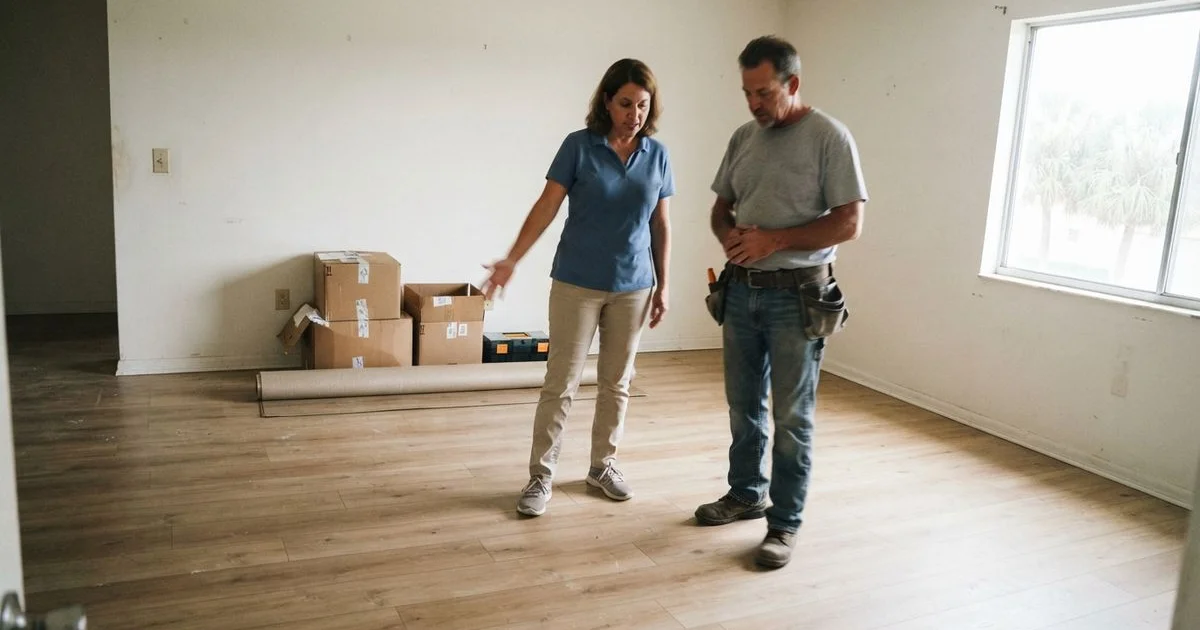
Flooring in a rental property faces a different set of demands than flooring in an owner-occupied home: more turnover, less consistent care, and a landlord who needs the numbers to work across years of tenants, not just one family’s preferences. The right choice balances upfront cost against how much it’ll actually cost to maintain across multiple leases.
Why durability matters more than looks here
A material that photographs well for a listing but shows every scuff within a year creates a cycle of touch-ups between tenants that eats into margin. For rental properties, the more useful question isn’t “what looks best” but “what still looks acceptable after three tenants and minimal individual care.”
Pets add another layer to this. A material that handles scratching, moisture from accidents, and repeated cleaning without staining is worth the extra upfront cost in a pet-friendly unit, since the alternative is more frequent full replacement.
Comparing materials for rental durability
| Material | Durability for rentals | Typical downside |
|---|---|---|
| Rigid-core vinyl (SPC/WPC) | High | Higher upfront cost than basic vinyl |
| Porcelain tile | High | Slower, costlier installation |
| Laminate | Moderate | Vulnerable to standing water at seams |
| Carpet | Lower | Frequent replacement, especially with pets |
| Solid hardwood | Variable | Refinishable, but scratches and dents show |
| Engineered hardwood | Moderate-high | Better moisture tolerance than solid wood |
Rigid-core vinyl products in particular have become a common choice for rentals because they resist scratches, handle moisture in kitchens and baths, and are relatively straightforward to spot-repair by swapping an individual plank. That last point matters more in a rental than it does in an owner-occupied home: a landlord managing several units benefits from a material where a single damaged section can be replaced without redoing the whole room.
Standardizing across units
If you manage more than one unit, using the same flooring material and even the same specific product across properties simplifies life considerably. Repairs become a matter of keeping spare planks or tiles on hand rather than trying to match a discontinued product years later. It also gives you predictable, comparable costs when budgeting for turnover between tenants.
Budgeting for flooring as a recurring cost
New landlords sometimes treat flooring as a one-time expense tied to a renovation. In practice, it’s a recurring line item, since normal wear plus the occasional harder-on-the-floor tenant means most rental flooring needs attention every several years, not once per decade. Building this into a maintenance reserve rather than reacting to it as a surprise cost each time keeps cash flow more predictable.
A rough rule some landlords use is to set aside a small percentage of annual rent per unit toward flooring and other flooring-adjacent wear, so the eventual replacement doesn’t come as a lump-sum surprise during a slower rental season. If a specific job is bigger than the reserve can cover, our guide on financing new flooring walks through payment plans and what to watch for.
What to check between tenants
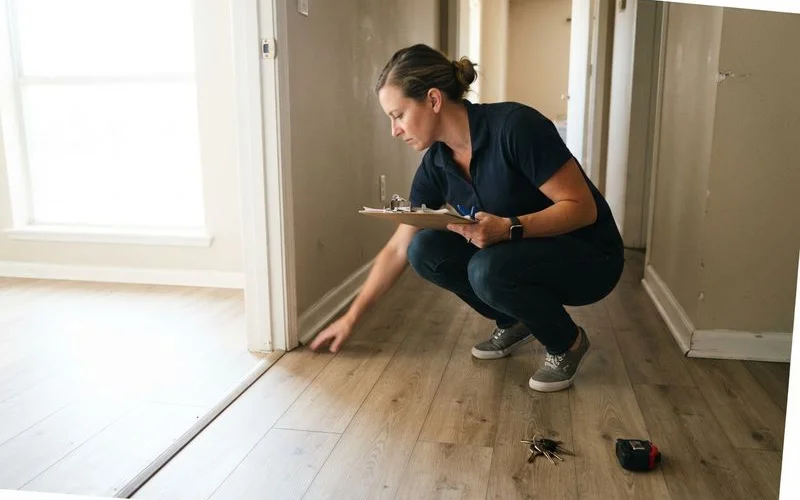
A walkthrough between leases is the natural point to assess flooring condition: scratches beyond normal wear, water staining near appliances or bathrooms, and any soft spots that might indicate a subfloor issue developing. Catching a small issue between tenants is almost always cheaper than waiting until it’s visible enough that a new tenant complains about it on move-in.
Weighing tenant-caused damage against normal wear
Security deposit deductions typically only apply to damage beyond normal wear and tear, and the distinction matters for both landlords and tenants. A worn path in front of a couch after a multi-year lease is normal wear. A deep gouge from moving furniture without floor protectors is closer to tenant-caused damage. Photographing flooring condition at move-in and move-out for every unit protects you either way if a dispute comes up.
Finding a contractor who works with landlords
Not every flooring contractor is set up for the faster-turnaround, higher-volume needs of rental property work. Look for one with experience quoting multi-unit jobs and a track record of finishing quickly between tenants, since vacancy time has a real cost. Our Tampa flooring contractor directory, ranked using our scoring method, is a solid place to compare options and see which contractors have relevant experience.
FAQ
- What's the most durable flooring for a rental property?
- Rigid-core vinyl products and porcelain tile tend to hold up best across multiple tenants, since they resist scratches, moisture, and everyday wear better than carpet or solid hardwood.
- Should I use the same flooring in every unit?
- Standardizing on one or two materials across units simplifies repairs and replacement, since you can patch or match sections without sourcing a discontinued product for a single unit.
- Is carpet ever worth it in a rental?
- It's cheaper upfront but usually needs replacing more often between tenants, especially with pets, which can make the lifetime cost higher than a more durable hard-surface option.
- How often should rental flooring be replaced?
- That depends heavily on material and tenant turnover, but budgeting for flooring as a recurring cost every several years, rather than a one-time expense, is a more realistic way to plan.